
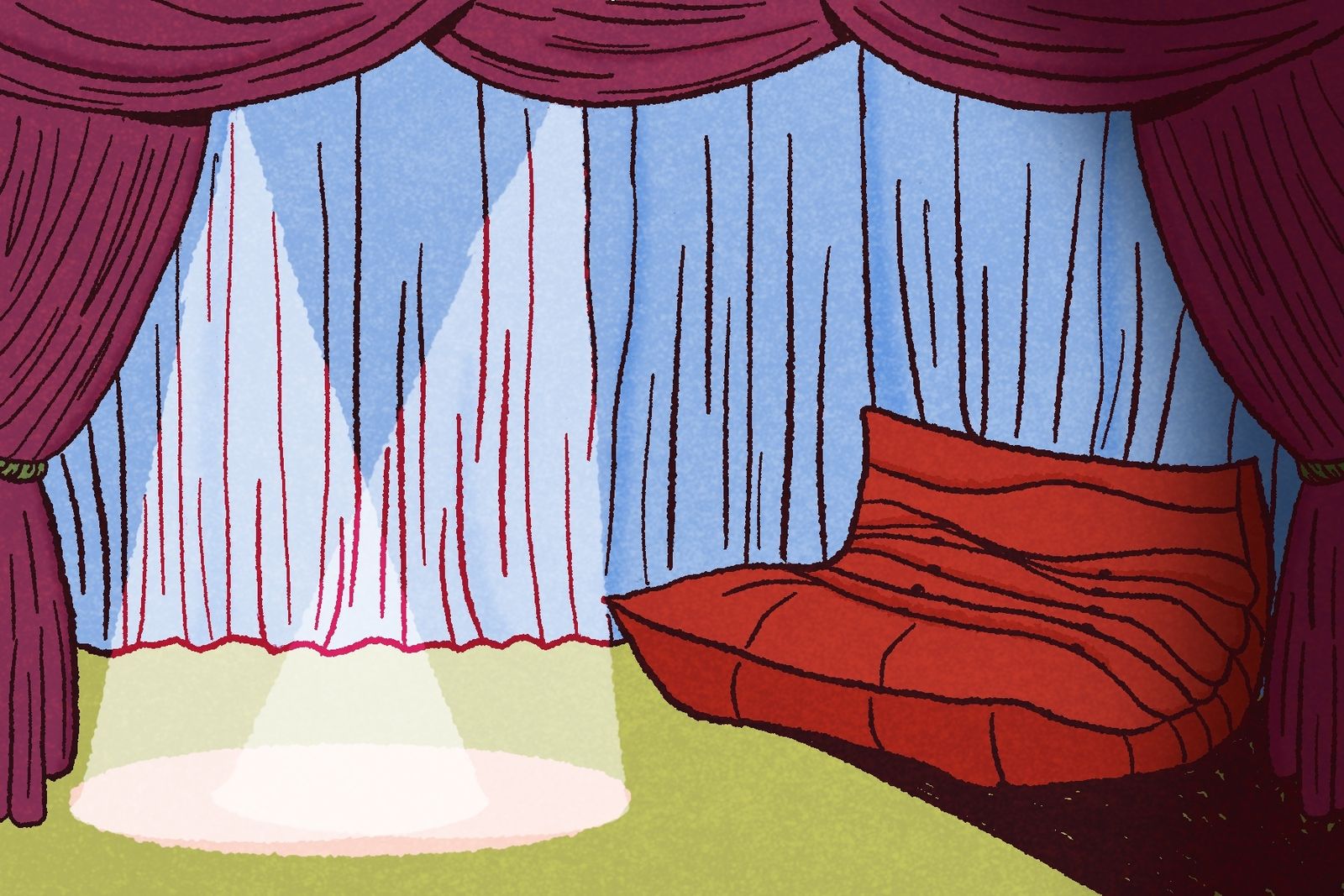
Welcome to Field Guide, a column by Sami Reiss of Snake covering all-time design and where you can find it.
Did any other design item have as good a pandemic as the Togo? Probably not. Consider the timeline: one single Ligne Roset sofa, designed by Michel Ducaroy in 1973, unveiled to skepticism in its debut, outdoes expectations, remains in production, and then, 50 years later, as people are stuck in their homes, goes viral in a way that few, if any, pieces of furniture have. Prices explode, people lust after it, and containers of old Togos are shipped stateside from overseas. Furniture usually doesn’t get this exciting.
In the past couple of years, though, the aura around the sofa has drifted a bit back to earth. Sellers aren’t promoting it as much, it’s in fewer photo shoots, and old Togos have been fetching lower prices at auctions than they did at the height. But during its descent, no other sofa has taken it from its perch. And so we might ask, where is the new viral sofa? And can it exist?

A renovation in Los Angeles’s Silver Lake neighborhood has a configuration of the Togo in corduroy.
Before 2020, the Togo was a connoisseur’s sofa, one interchangeable with the Chiclet and the Anfibio: a canonical piece, if obscure or ugly to people outside the design industry. Then things changed, because of two factors: social media and availability. It shook out like this: if you were at home and bored during the pandemic and had an inkling of interest in design, you probably had your eye on a Togo. The sofa—the chair, the corner piece, the settee—was hard to escape. Featured on TikTok, in shelter publication home tours from Dwell to Architectural Digest, by influencers, on Reddit discussions, as dupes on Facebook Marketplace, and as a meme (slide 5), it eclipsed its pre-pandemic origins as a regular, run-of-the-mill elite vintage item to become an era-defining piece of furniture.
Interest in the Togo, says Coco Robazza, a vintage furniture dealer and sourcer for In Corso, in Toronto, came out of an unprecedented interest in design itself during the pandemic. “A ton of people got into vintage furniture then,” she explains, and through “influencers and celebrities,” it was pushed into “the mainstream.” Through that massive new popularity—pushed through social media, specifically through TikTok, and through home tours—different old, bulbous, or curby sofas, including the Togo, cut through the noise.
But it also helped that for an “it” couch, the Togo was very flexible, and came in lots of options. During the pandemic, the sofa “fell into the comfy/cute thing,” explains Dan Rosen, a comedian who critiques design and furniture with his podcast, Middlebrow. What’s more, Rosen says, the Togo was “relatively affordable compared to other iconic couches, and looked comfortable,” and the serious backlog of vintage Togos—in all sorts of colors and options—allowed for more than just one aesthetic to prevail. “Its leather and orange and other colorways,” Rosen explains, helped “it fit into the hypebeast/Fellow kettle/record collector/sneakerhead world.” The Togo is both comfy and “unisex,” he adds.

A 1974 advertisement shows the Togo in a striped green fabric.

The designer of the Togo, Michel Ducaroy, said it’s like “a tube of toothpaste folded back on itself like a stovepipe and closed at both ends.”
Modularity also played a part, as did the sofa’s long-simmering dependability. Available in a number of options—as a chair, a two-seater, a corner piece, or even a massive sectional—the sofa has remained in production in those options, and what’s more, as it went viral, vintage varieties were unearthed and became easier (if more expensive) to buy. “It was so readily available,” Robazza explains. Consumers who liked what they saw could do vintage, a newer option, or even dupes, which set it apart, on a purchasing level, from other archival design pieces. “There’s such a scarcity with vintage pieces,” Robazza explains—so much so that “you’re never gonna see the rare pieces come into popularity.” But with the Togo, there was a shot.
Of course, it’s not all about availability. While it’s hard to believe now, as the piece ascended in popularity, it offered an aesthetic reprieve. The Togo “cut through the suburban classic midcentury-modern tapered oak leg/basic squarish form thing,” when it went viral, says David Michon, who writes the design newsletter For Scale. He describes the sofa’s popularity as a “perfect storm.” It was a “singular and radical” sofa back then, Michon says, that “had a kind of ’70s retro energy that was and is sort of still happening.”
Still, how did the specific piece go from obscure design bonafide to viral meme content? One theory is that it was through a taste trickle down, as happens with viral pieces of clothing. “A vintage furniture picker gets a sofa,” Rosen explains, “then an interior designer will place that sofa in clients’ homes, then one celebrity designer will put it in a Jenner’s home,” and then it gets featured in photoshoots, memed, lusted after, and blows up from there.
These confluence of factors—visibility, disruption, availability—have made it hard, maybe even impossible, for another piece of furniture to unseat the Togo, or match the energy that it had a few years ago. Still, tastes are changing. For her part, Robazza notes that her more forward-thinking clients are moving in two different directions: first, toward “classic antique pieces that weren’t as cool” as the Togo was at its height in 2022—random flea-market finds, and wilder, statement pieces—which they’re experimenting with, or pairing with different aesthetics; second, Robazza has also been seeing “a move back to organic wood,” she explains, from clients who are “getting rid of glass and chrome for rosewood—not in a Danish teak way, but in the Brazilian, Percival Lafer way.”

Rebecca Rudolph has a set of Togo sofas in the living room of her Atwater Village home in Los Angeles.
Rosen, who also loves the “underrated” Brazilian furniture of that era from Lafer and Sergio Rodrigues, and sees it becoming ascendant, predicts more of a starkness. While organic shapes remain, he predicts “a mix of soft round edges with harder more industrial pieces, and a lot more steel and metal,” saying that we’ll see more pieces that look like items by Milanese manufacturer “NM3, or collectible, Berlin stainless steel or aluminum pieces—but with more curved shapes.”
Still, do we want a sofa to actually go viral? The Togo, “when the moment is over,” says Michon, “will have its edge back, but I don’t aspire for something to take over,” in the way the Togo did. He wonders if the aesthetic conversations that are changing fashion—the “certain conservatism” of “super feminine and masculine archetype photo shoots”—might creep into design. Will we see more “throwback, Todd Haynes in Safe” antiseptic-like furniture, or midcentury-modern pieces making a run?
Whatever the next viral piece, it has to be plentiful, and kind of affordable. Separately, Michon, Rosen, and Robazza all settle around canonical pieces from the 1970s that design aficionados already likely know. “Le Bombole is coming,” says Michon, explaining, through vibes, that he “can feel it in the earth.” Robazza picks out Bellini’s 1972 classic over the ascendant Camaleonda because it’s more comfortable. For Rosen, “whatever will replace the Togo,” he says, “will be a modular sofa—like the Dune or the DS-600.”
Still, it all might just come back to TikTok. Robazza, when asked about what her clients have been asking for since the Togo, offers a video-based example. “There’s one guy in L.A. with the Maralunga, and clients keep sending me screenshots of his couch.” Supply and modularity aside, it’s the eyeballs that make the difference.
—
What might go neck and neck with the Togo? Many equivalent pieces can be found on auction sites if you’re looking for another aesthetic.
Ubiquitous
The Togo’s still humming along on auction and secondhand sites, available in a number of colors (most often dark), shapes, and sizes. If you dig around you might only pay under $2,000 for a vintage item, though they command more, still, at curated vintage shops.

Sleeper
Robazza and Rosen’s pick, Cassina’s Maralunga sofa, has been a favorite of writers and curators for a number of years, though it hasn’t taken over as much as the Togo due to supply issues. But sofas and settees have, for the past couple of months, been auctioning off at a roughly $2,000 and slightly north of that clip.

Rare
Call it a comeback: the Anfibio was the darling of the design set about a decade ago when the Italian thing popped back up. Some of it was because design guru Jim Walrod had one; some was because they’d only reliably been seen around Europe. It’s low to the ground but has a massive footprint; it’s been auctioning off in the high four figures for the past couple of years, but sometimes much less than that.
link