

Boston Home
With showrooms in historic Freeport and Portland buildings, Chilton bet big on quality over trends.
Courtesy photo
This article is from the winter 2026 issue of Boston Home. Sign up here to receive a subscription.
Founded in 1885, Chilton Furniture began not with tables or chairs but with paint, manufacturing finishes in New York, and later in Maine. By the 1970s, increasing scrutiny of finishing and paint companies due to environmental impacts pushed the business in a new direction: showcasing locally made unfinished wood furniture, which quickly outshone the finishes it was meant to feature. During the 1980s, Amish-built cherry pieces crafted in the Midwest became the mainstay. As the company evolved, it moved further from its paint-making origins, and by the 2010s, it was ready for a new chapter; that’s where Jennifer and Jared Levin come in.
In 2014, the couple purchased the company as part of their move to Maine. While Jennifer initially imagined Chilton as a new venture for Jared, it quickly became her own focus. With roots in New England—growing up in New Hampshire, attending school in Maine, and spending summers at her grandparents’ cottage in Ocean Park—the transition felt like a homecoming for the former lawyer, eager to pursue work that better reflected her personality.
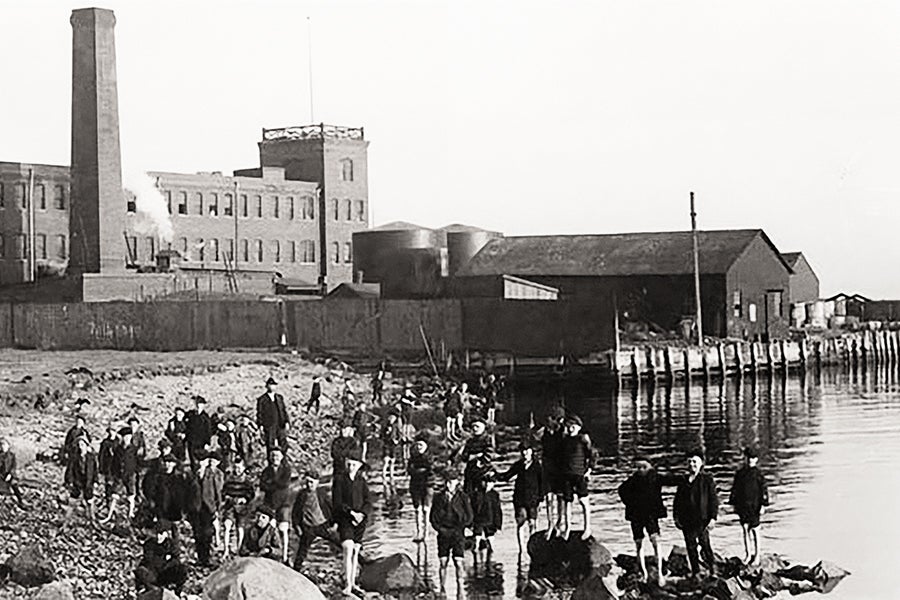
Chilton’s backstory features a rich history. The company, which initially focused on paint manufacturing finishes, first launched in New York. Pictured here is the original Paint Co. manufacturing building in College Point. / Courtesy photo
The couple set out to honor Chilton’s wood-centric legacy while simultaneously steering the company firmly into the present and beyond. “We wanted to create a modern take on traditional New England furniture with pieces that pay tribute to history but also feel at home in contemporary life,” Levin explains. “We also sought to up the ante when it came to the design quality and craftsmanship.” A big focus for the Levins was to expand the type of wood species Chilton offered and create a consistent design aesthetic. As co-owners, they phased out stains in favor of natural wood grain, expanded into four domestic hardwoods (cherry, hard maple, walnut, and white oak), and in 2018, doubled down on local production by bringing in award-winning designer Adam Rogers, who lived in the area. Rogers has extensive design experience, formerly serving as the director of design and product development at Thos. Moser. Although not an employee of Chilton, he has played an important role in helping the company find and refine its voice as a brand. “We wanted people to enjoy the texture and patina of the wood,” Levin continues. “We also thought this [process] simplified everything and was an easier way to offer the furniture to our customers.” By working with independent local workshops, the company’s new evolution also reduced environmental impact and embraced community roots. The result? Today, more than 90 percent of Chilton’s offerings are made in Maine, up from 26 percent in 2014.
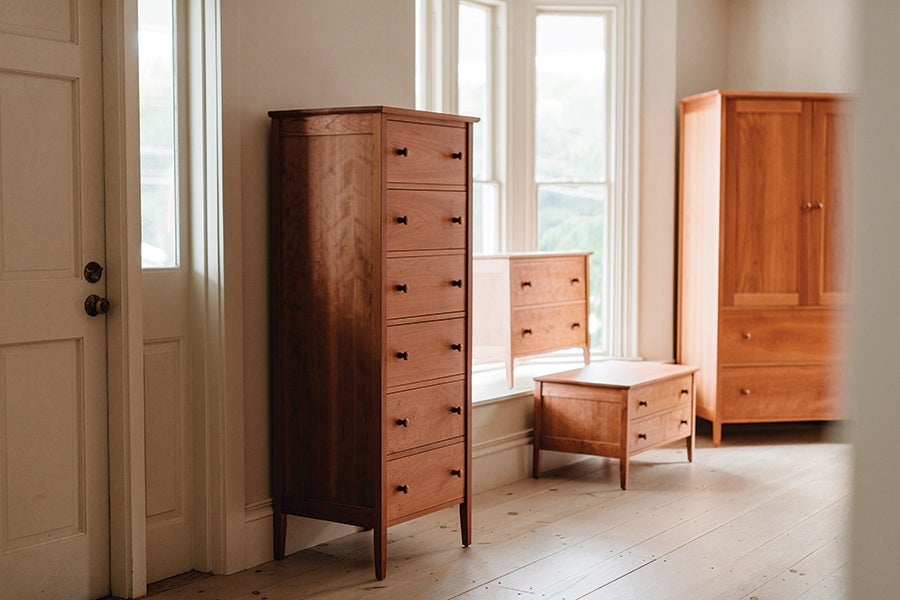
An assortment of Shaker collection dressers and armoires (pictured here in cherry) focuses on simplicity and clean lines. / Courtesy photo
Built with traditional techniques and sustainably sourced hardwoods, Chilton products are meant to last for generations, which is underscored by the company’s lifetime warranty. Clean-lined, proportion-driven work has shaped several of its signature collections, including the Hudson line (with its popular reinvention of the Bowback chair) as well as the award-winning Nautilus chair. The design philosophy has expanded into Chilton’s Shaker-inspired collections, too, which continue to remain customer favorites.
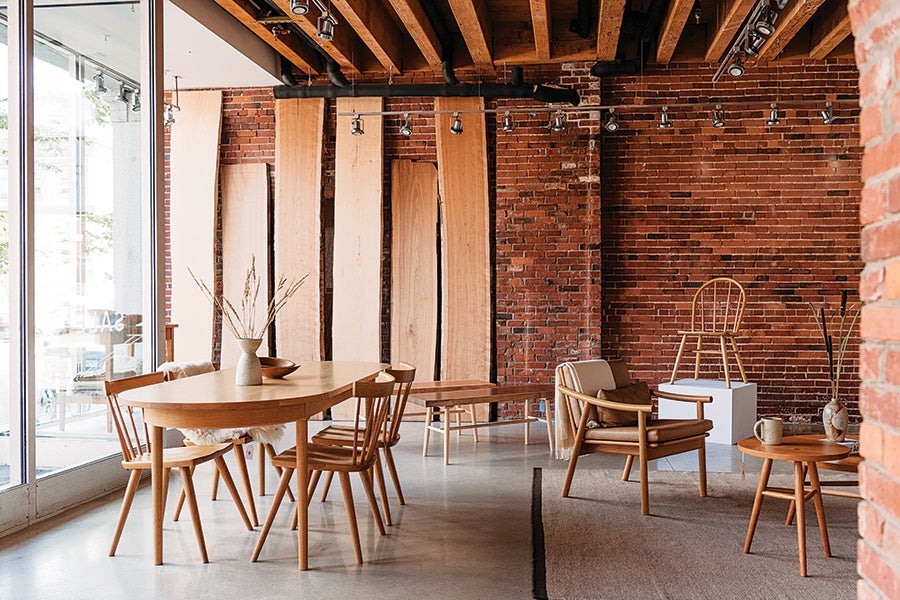
Chilton has two showrooms in Freeport and Portland; both are housed in historic buildings and firmly rooted in the local community. “What we’ve learned is that we need to find places that have history as a backdrop, then we can place our product, which is a reinterpretation and yet a tribute at the same time, within that environment,” Levin says.
As for the future, the team at Chilton will continue to craft heirloom-worthy furniture that bridges past and present. “We believe we’re offering people something they can’t get elsewhere,” Levin concludes. “Designs that stand the test of time, carrying a New England story in every piece.”
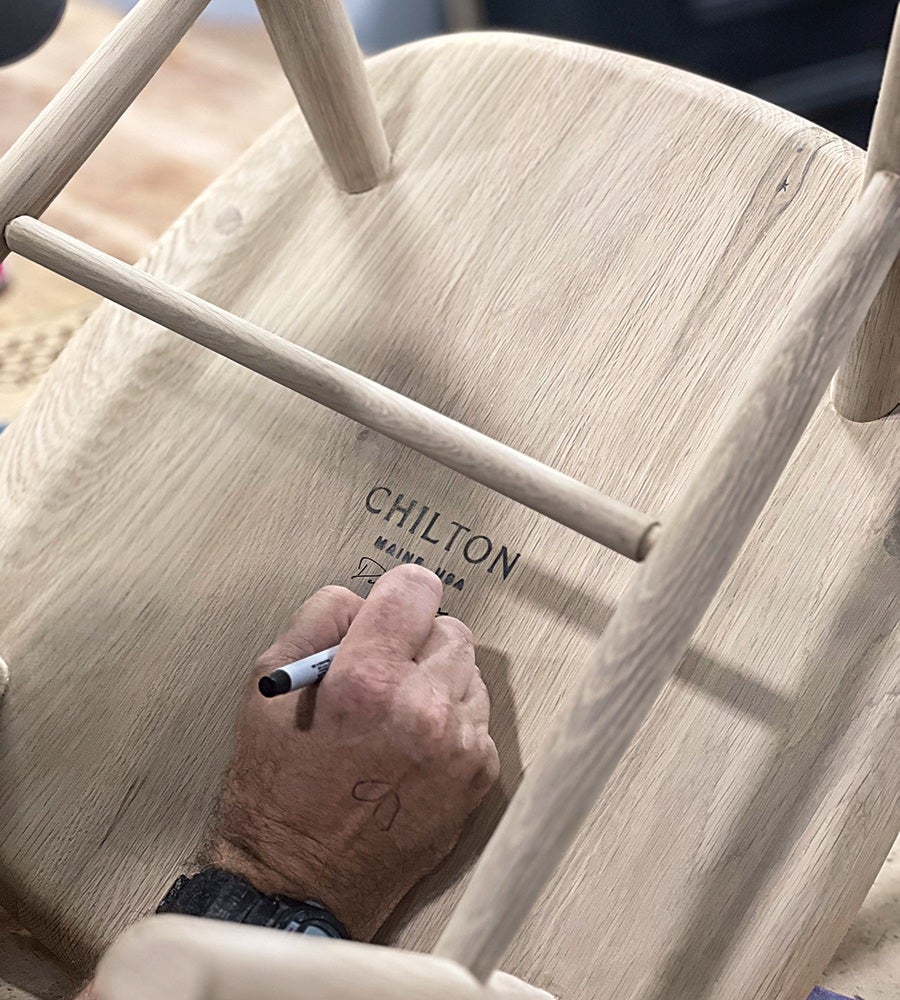
Each piece of Chilton furniture is handsigned by its partner maker to honor the individual skill and labor that went into its creation. / Courtesy photo
link