
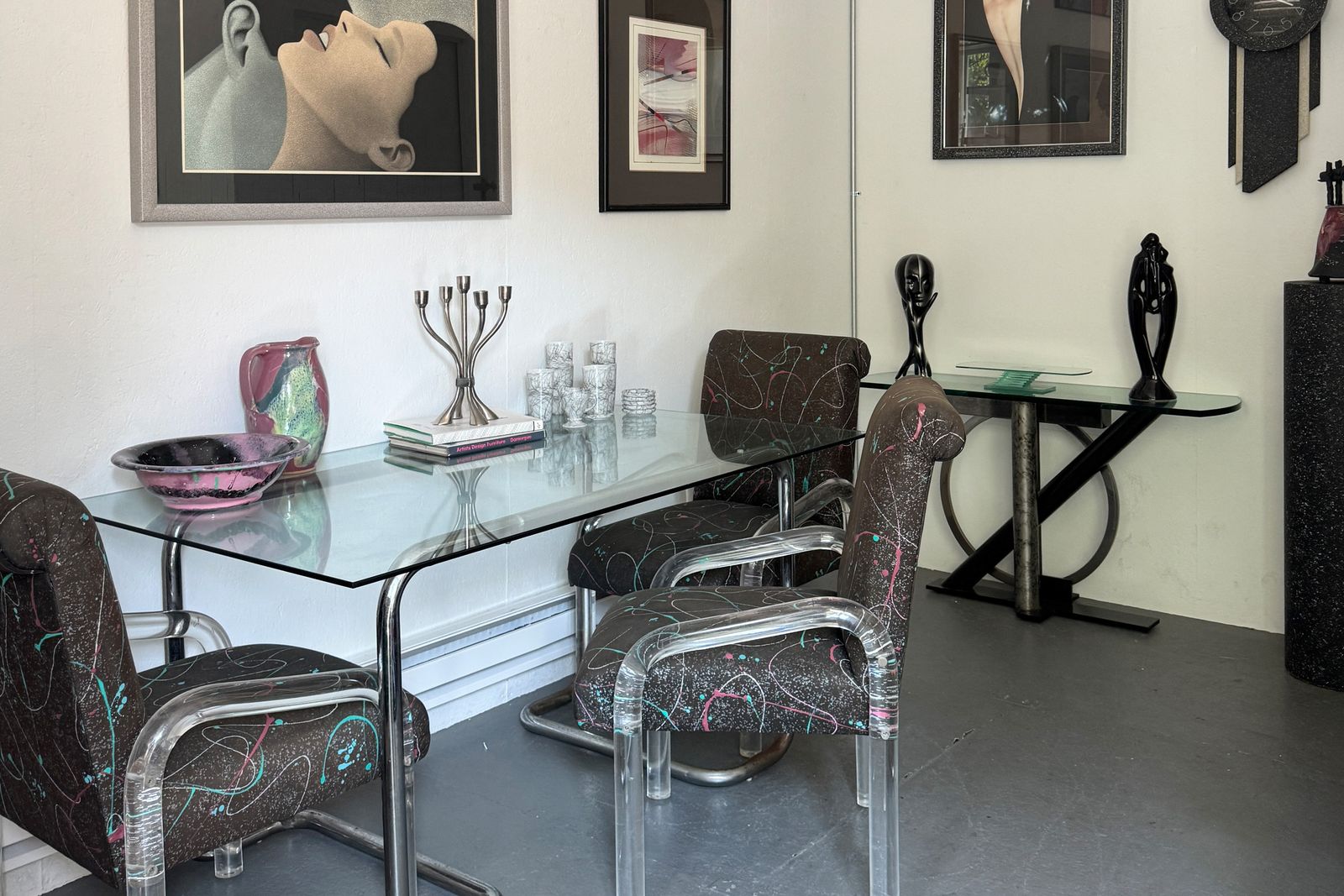
Welcome to Good Vintage, a series that goes behind the scenes with furniture resellers and dealers to find out how they got their start, where they get their stuff, and what inspires them to keep it up. Know of someone we should talk to? Reach out.
Carolyn Willander has a vision when it comes to showcasing her love for 1980s Art Deco, ’70s space-age, and ’90s postmodern design. When the 32-year-old opened Object Permanence, a vintage design shop in Bushwick, Brooklyn, in March, she decided to set up her modest, 175-square-foot staging space like an apartment and change up the interior style—and re-merchandise the entire store to match—every six weeks.
The result is an experimental shopping concept that’s part showroom, part art installation, and entirely immersive. Everything’s arranged to help customers envision how these pieces could be arranged in their own homes. “Someone came in for her empty apartment, bought five things from me, and sent me a picture of her apartment [that was set up like my store],” says Willander. “That’s the dream, for someone to come in and buy what I had created for them. I love giving people an example of how they can guide themselves with their decor.”
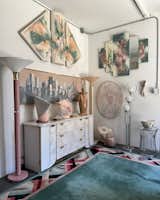
Carolyn Willander’s exacting eye for both merchandising and picking objects comes together in her store, Object Permanence. Her first aesthetic, a sort of 1980s-inspired Malibu Barbie Dreamhouse vibe, is replete with soft pastels and hints of chrome and lacquer.
Willander debuted Object Permanence with an aesthetic that she calls the “1980s Miami Barbie Dreamhouse.” Every piece fits into the specific color palette of washed-out coral pink, aqua blue-green, and ivory white, punctuated with shiny gold hardware. The South Florida-themed Easter eggs were all there: a framed flamingo, shells in the wall art, tropical birds on a lamp.
The rug, glimpsed at the bottom of the photo on the left, pulls the space together for every era Willander celebrates, and is definitively not for sale. (Everything else you see is!)
The next setup was a 1980s-meets-1920s Art Deco revival living room, which one could imagine a fabulous Manhattan woman of the Studio 54 era coming home to. Willander placed crystal sculptures on the shelves, covered the walls with glam art, and introduced pops of black that brought a level of intrigue and mischief to the space.
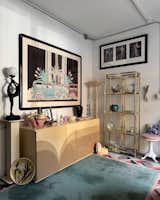
Willander is intentional with her aesthetics. Pictured here is the 1980s meets 1920s Art Deco revival look, featuring a beautiful etagere shelf in gold and glass.
How does Willander, a woman born in the early ’90s, have such a discerning eye for these specific yesterdecades? “I have a degree in scrolling studies from Facebook Marketplace University,” the self-taught dealer jokes. In truth, she’s put in her time. Prior to Object Permanence, Willander co-ran a vintage store called Sidepiece, focused on midcentury-modern furniture, where she and her then business partner came up with the idea to rotate styles. And before moving to New York City in 2023, Willander lived in a large DIY artists’ loft and event space in Boston that she constantly redecorated with secondhand furniture. In her mid-20s, Willander worked as an antiques interior designer for a 10-room Victorian bed-and-breakfast.
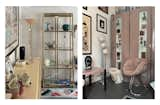
The mauve entertainment center on the right was a Facebook Marketplace score; it’s a custom piece that, according to the owner, was featured in Architectural Digest.
Her Instagram account, which was initially launched as a personal marketplace, soon turned into a portal where she could discover and connect with other dealers focused on the 1980s, like ’80s Deco Hunter and Dolphin & Flamingo. Her growth has been steady and organic. “I built my audience selling $60 to $100 prints to women in their twenties,” says Willander. “One day I went out with a U-Haul van to Long Island and acquired a lot of art on that trip, which was easier to pack up and have in my house.” Her vast collection of artwork continues to be an integral aspect of her rotating interiors—these framed designs not only bring life to the walls, but they help tie her themes together.
“I’m just trying to do something different with Object Permanence. It’s an area that I knew I could carve a niche for myself,” says Willander. “I’m always looking for the custom piece. I don’t want the thing that everybody else is selling.”
Ahead, Willander digs deeper into her decorating and buying process by walking us through her most recent interior style, which she’s dubbed “Moody Mauve (& Gray).”
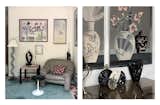
Willander’s vast collection of art and decorative objects really help to flesh out an aesthetic.
Theme it with tones and textures
“When I think about future looks, they are a combination of color and aesthetic. If you scroll down my Instagram grid, you can really see how I have clustered the items,” she says of how certain pieces help the themes transition seamlessly into one another. Willander cites Directional and Fran Murphy, two vintage brands that placed a lot of ads in Architectural Digest in the 1980s, as inspiration. “I have this dark, primary color look queued up but it’s not right for the summer. I need to wait until the fall to do those heavy colors,” she says. Other materials Willander is thinking about are Mediterranean-style marble and stone. “I’m going to start with dark marble and stone to transition out of this current look, and then by August I’ll be in lighter marble and stone.”
Buy into buyer behavior
Willander has noticed purchasing patterns, such as the order in which people buy things for their home—it may be the reason why her shop has been set up as living and dining rooms but not a bedroom (at least, not yet). “The kitchen table and the couch are the two big things people want first. From there, they’re looking for coffee tables and side tables, and then they’re looking for lamps,” she observes. “The bedroom is always the last thing people decorate.”
Think outside the estate sale box
“People will come in and say, ‘So you really cleaned out an estate sale,’ but actually, almost none of this came from the same place because I am really curating all of these pieces together,” says Willander. She points out that even though the dining area looks like a set, the table is from Connecticut and the chairs are from Long Island. The tubular chrome legs are the common through line. “I get so much of my stuff on Long Island from folks who are downsizing right now. These are not estate sales for people who passed away, but for folks moving into smaller apartments or retirement homes,” she says.
“I built my audience selling $60 to $100 prints to women in their twenties.”
Restore it yourself
The chrome legs of the glass-top dining table were showing its age—but that didn’t stop Willander from buying it. “I spent many hours scrubbing it with steel wool to get all the rust off,” she says, but it was all worth it to reveal the shiny silver underneath. “I don’t do a lot of resto, but I do cleanup, which is a reason I moved away from midcentury furniture because those require more restoration than ’80s stuff.”
Stick to the bit
“Six weeks is about how long an apartment’s worth of stuff has taken me to sell,” she says of her current rotation schedule. It means that if a customer wants to buy a larger furniture piece, such as a dresser or couch, they may have to wait a few weeks to receive it because Willander would need to replace it with a similar item. If a customer only wanted the dining table, Willander would be left with the chairs and “an apartment would never have three chairs leaned against the wall,” she says. Fortunately, Willander’s clients are down with the concept. “They say, ‘Yes, I see what you’re doing and I’m happy to wait, and I’m excited to see what you put in place of this thing that I bought,” she says.
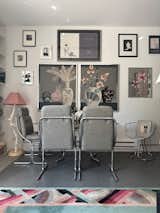
When furniture and other objects are arranged as they would be in someone’s home, it’s easier to visualize it in yours.
Timing is everything
If you’re in the market to score some vintage gems, think seasonally. “Fall will always be the busiest time of year because all the students are moving—it’s the biggest moving time anywhere,” says Willander. “My art business is at its best January through April because people have all their furniture and they’re sitting inside during the winter looking at their empty walls and they want to fill that up.”
Lead with the aesthetic
Shockingly, Willander doesn’t rent a storage unit so everything she buys needs to fit inside her tiny, 300-square-feet storefront (there’s a sliver of storage behind a wall and in the bathroom). Once in a while, she might keep smaller items in her apartment, but for the most part, she keeps her home aesthetic separate. But working within a tightly controlled concept has helped Willander source more thoughtfully. If she finds an objectively stunning vintage piece but it doesn’t fit with her current look, she’ll pass on it. “I naturally buy things that go with other things that I have,” she says.
When in doubt, get a good rug
Even though Object Permanence is set up like an apartment, the floor itself is unfinished as it’s still a commercial space. To help pull the interior together, Willander stages her setups on a gigantic aquamarine rug, which, funny enough, is the only item that is not for sale. “This rug will go with almost everything that I ever do here,” says Willander, “but of course, somebody messages me every day to buy this rug.”
Consider the lighting
Because Willander’s first two themes had gold accents throughout, she installed warm white light bulbs to complement the yellow-based metallic tones. Her current look, however, is all about the chrome so she replaced her usual bulbs with cool white lights since a brighter illumination would work better with the silver. “I’m thinking down to those things too,” she says of how to set the mood.
Take the leap (on your taste)
“I really have to trust myself and take leaps all the time,” Willander says, referring to a custom entertainment unit that had once been featured in an old issue of Architectural Digest. She couldn’t even take the whole thing because it was a massive system that housed a large TV projector set. “What you’re looking at is the two sides. I left the middle,” she says. It was not only a risk to purchase, but Willander had to hire local movers in Long Island and Brooklyn to help her load this in and out of her rental truck. Fortunately, “it has paid off because I also got a dresser [during the same trip] that I sold that paid back my costs for this.”
Top courtesy of Object Permanence.
Related Reading:
link